Airbus Deliveries Hold Steady as Boeing Output Slows in October // Airbus Orders Rebound Sharply as Boeing Maintains Strong Bookings // 737 MAX Deliveries Fall to 31 Aircraft While Widebody Deliveries Accelerate
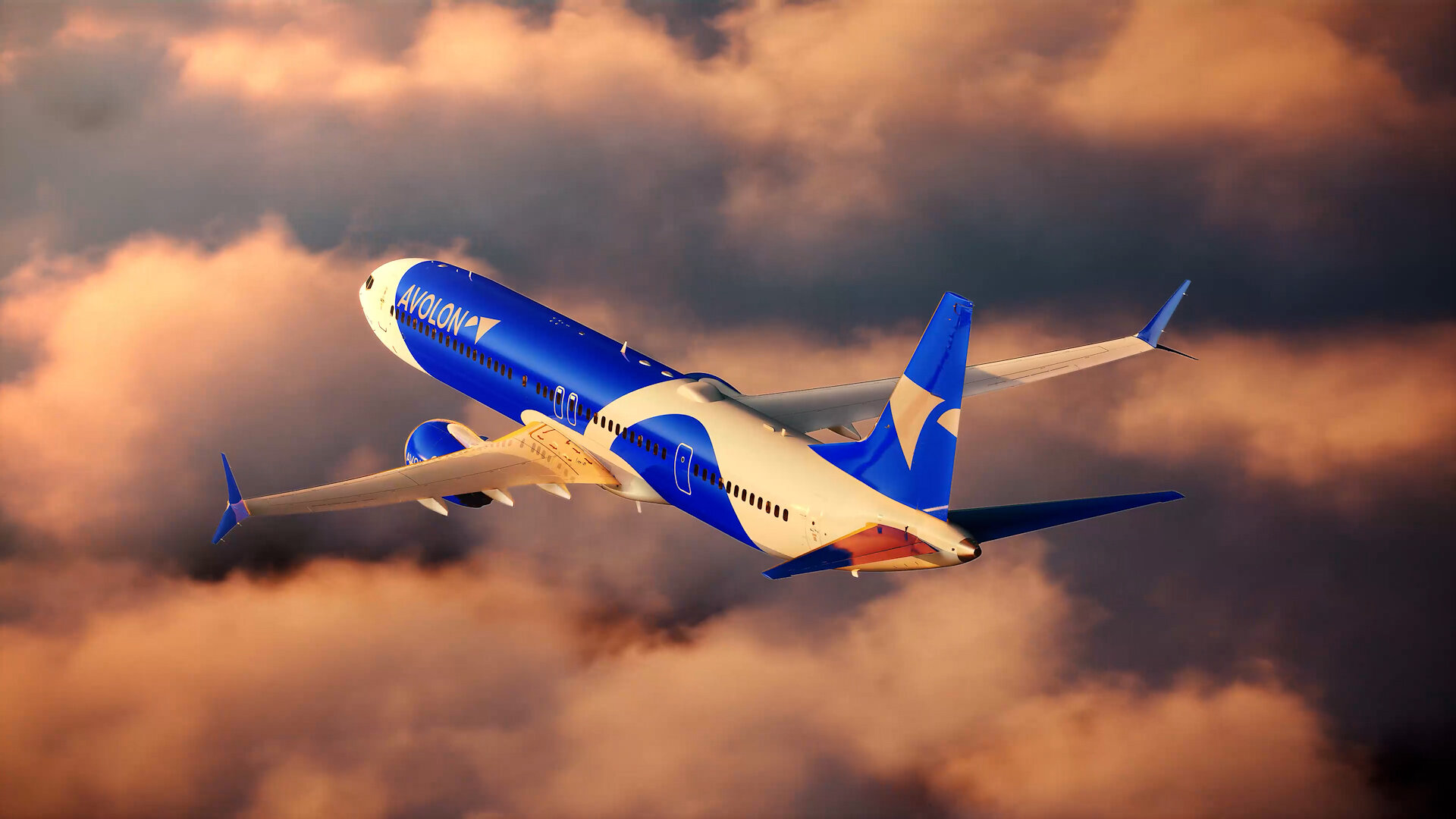
Avolon 737 MAX 10. Image – Boeing
October 2026 Summary
The data and commentary presented in this article offer a high-level overview of Airbus and Boeing based strictly on publicly disclosed information. Our comprehensive Commercial Aircraft OEM Intelligence Brief incorporates broader performance indicators not disclosed by OEMs to evaluate the true health and execution of commercial aircraft programs. For in-depth OEM analysis and program-level insights, explore the full Commercial Aircraft OEM Intelligence Brief.
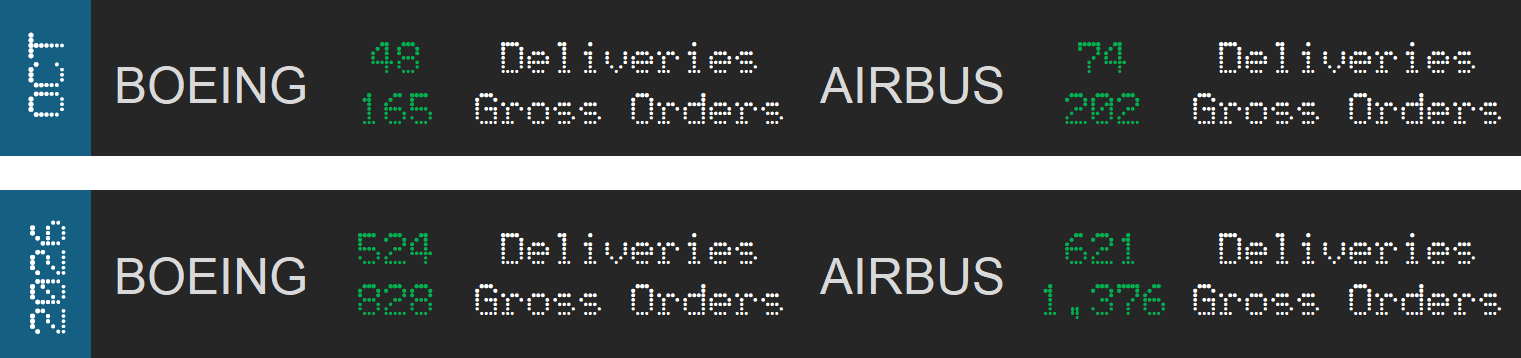
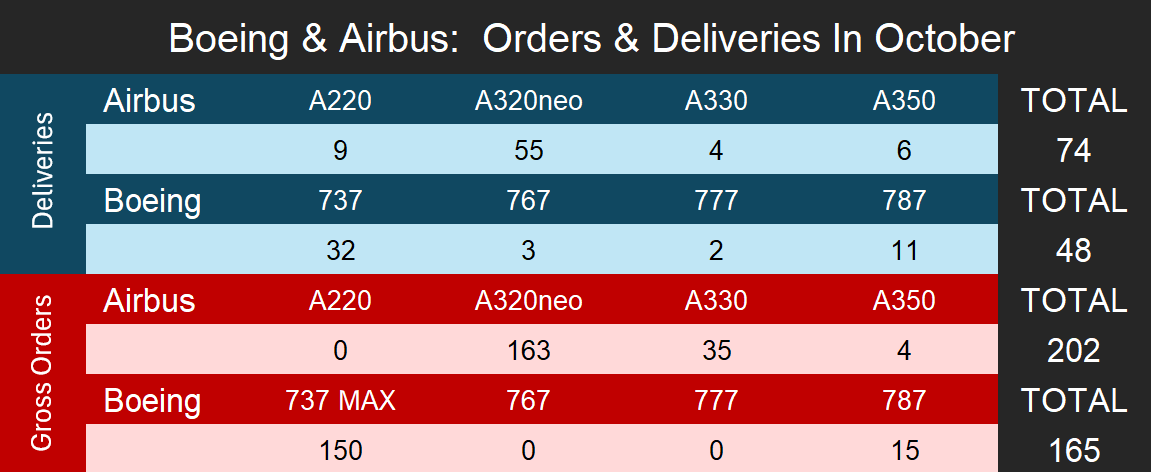
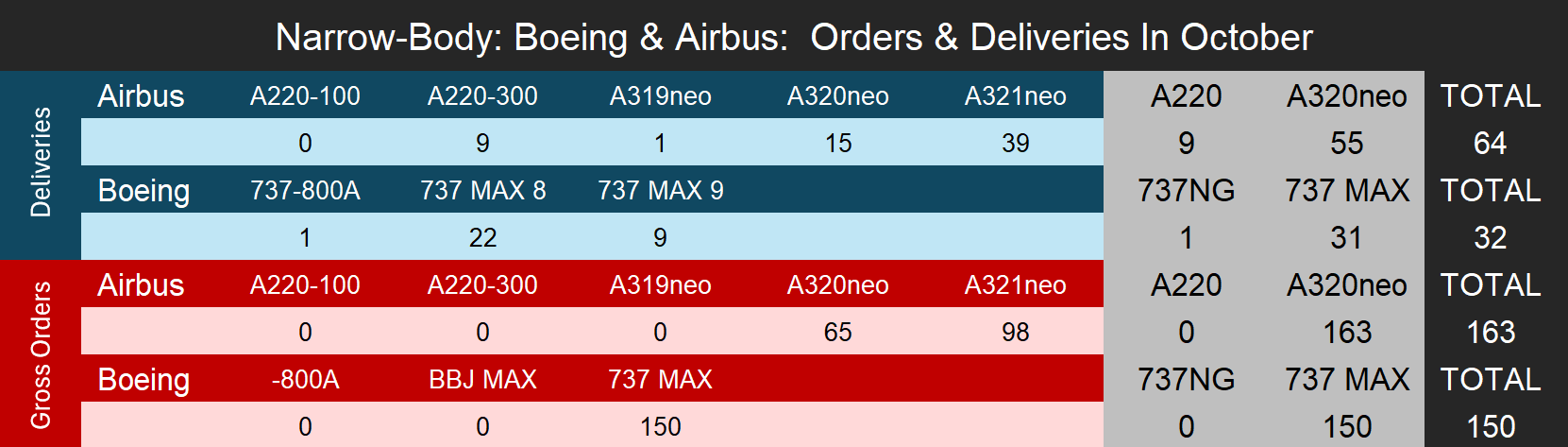
The commercial aircraft delivery and order landscape shifted in October 2026 as performance between Airbus and Boeing diverged. Airbus delivered 74 commercial jets during the month, driven predominantly by its narrowbody lineup, which included 55 A320neo family aircraft and nine A220s, while its widebody segment added 10 deliveries. This brought Airbus’s year-to-date total to 621 aircraft against a full-year target of approximately 870 units. Meanwhile, Boeing completed 48 deliveries in October, comprising 32 737s (31 MAXs and one NG) and 16 widebodies, bringing its 2026 total to 524 aircraft. With Boeing’s monthly deliveries declining from September, Airbus expanded its delivery lead over its rival to 97 aircraft through the first ten months of the year.
Despite Boeing’s slower delivery pace, order activity remained robust for both manufacturers. Airbus logged 202 gross orders, led by 163 A320neo family commitments alongside 35 A330s and four A350s. Boeing sustained its own momentum with 165 gross orders, fueled by 150 bookings for the 737 MAX platform and 15 787-10 Dreamliners. Bolstered by October’s results, Airbus widened its annual sales advantage to 1,376 gross orders compared to Boeing’s 828 through October 31. In terms of overall order books, Airbus maintained an active backlog of 9,430 aircraft against Boeing’s 6,972.
- A320neo numbers include all variants for the family; A319neo, A320neo and A321neo.
Boeing Deliveries
Boeing delivery activity decreased during October, with only 48 aircraft delivered compared to 57 in September. The 737 program represented the primary portion of this number but fell below the current target rate for the program of 42 aircraft per month, accounting for 32 total deliveries comprising 22 737 MAX 8s, nine 737 MAX 9s, and one 737-800A. However, despite 737 MAX deliveries slowing to 31 aircraft from September’s 43 units, overall production continues to reflect strong health, and there are no concerns as a result of the lower deliveries in October. Additionally, despite the 737 MAX 7 and MAX 10 being certified, Boeing has yet to deliver any of its current inventory of these variants, with the expected first delivery of the MAX 7 to be to Southwest in December 2026, and the MAX 10 in the first quarter of 2027 to WestJet.
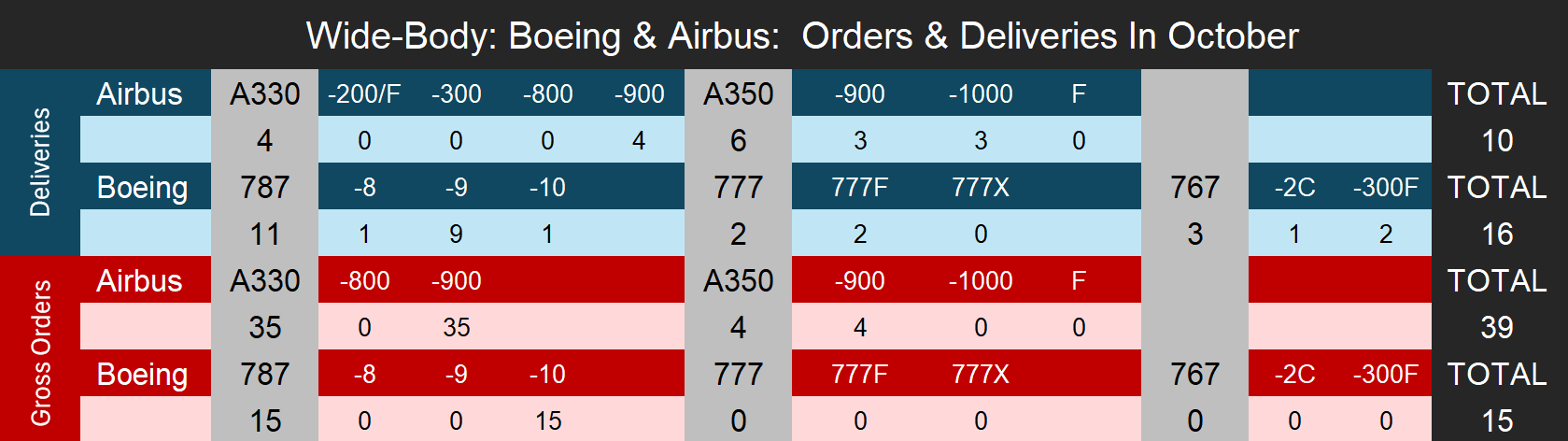
As for the widebody segment, Boeing delivered 16 twin-aisle aircraft in October, up from 14 units in September. Deliveries in this category included 11 787 Dreamliners (one -8, nine -9s, and one -10), three 767s (one -2C model and two -300Fs), and two 777 Freighters. The increase in 787 deliveries to 11 aircraft was not a result of higher production but rather Boeing clearing stored inventory on a program that has had elevated levels of inventory and volatile production and deliveries in the past year. This is a positive sign for the program, as clearing inventory allows Boeing to focus on producing aircraft straight off its assembly lines and delivering them directly to customers, rather than allocating resources to reworking stored aircraft that had been produced in prior years.
Airbus Deliveries
Airbus demonstrated another strong month in October in terms of deliveries, with the manufacturer delivering 74 commercial jets compared to 72 in September. Narrowbody aircraft represented the primary share of this output at 64 deliveries, driven by the A320neo family with 55 aircraft (comprising 39 A321neos, 15 A320neos, and one A319neo) alongside nine A220-300s. Widebody performance also improved, but this was already an improvement from extremely weak performance, so it is rather a return to the expected rates for these programs. This was evident in the 10 widebodies that Airbus delivered in October, consisting of six A350s, split evenly between three -900s and three -1000s, and four A330-900s. Through the first 10 months of 2026, Airbus has accumulated 621 total deliveries, maintaining its lead over Boeing. However, reaching its full-year target of approximately 870 commercial aircraft will require delivering nearly 250 jets across November and December. Because this is an aggressive push that may not materialize, it remains uncertain whether Airbus will reach its year-end delivery target, though the manufacturer has not revised this figure downward as it has in previous years.
Boeing Orders
Boeing order intake remained strong in October, securing 165 new gross commitments and matching its September total. Narrowbody aircraft accounted for the vast majority of activity, with the 737 MAX platform capturing 150 gross bookings. Widebody activity contributed 15 gross orders, all concentrated in the 787-10 Dreamliner, while the 767 and 777 platforms logged no new orders for the month. These additions pushed Boeing’s total 2026 gross orders to 828 aircraft through October 31. While Boeing’s order pace in 2026 has been strong, Airbus’s high October totals kept the European airframer firmly in the sales lead with 1,376 gross orders.
- For consistency, this article does not include Boeing’s ASC 606 accounting adjustments and considers net orders as gross orders minus cancellations.
Airbus Orders
Airbus experienced a strong order rebound in October, securing 202 new gross commitments after the manufacturer received only 17 gross orders in September. Demand was concentrated in single-aisle jets, where the A320neo family secured 163 gross orders (comprising 98 A321neos and 65 A320neos), while the A220 logged zero orders. Widebody platforms also enjoyed significant activity, logging 39 gross bookings, of which 35 were for the A330-900 and four were for the A350-900. The October total brought Airbus’s 2026 gross order count to 1,376 aircraft through October 31. With this strong showing, Airbus expanded its 2026 lead over Boeing to 548 gross orders.
Backlog
- Airbus backlog numbers do not include A320ceo ghost orders.
- Boeing backlog numbers do not include 777-300ER ghost orders.
- A320neo numbers include all variants for the family; A319neo, A320neo and A321neo
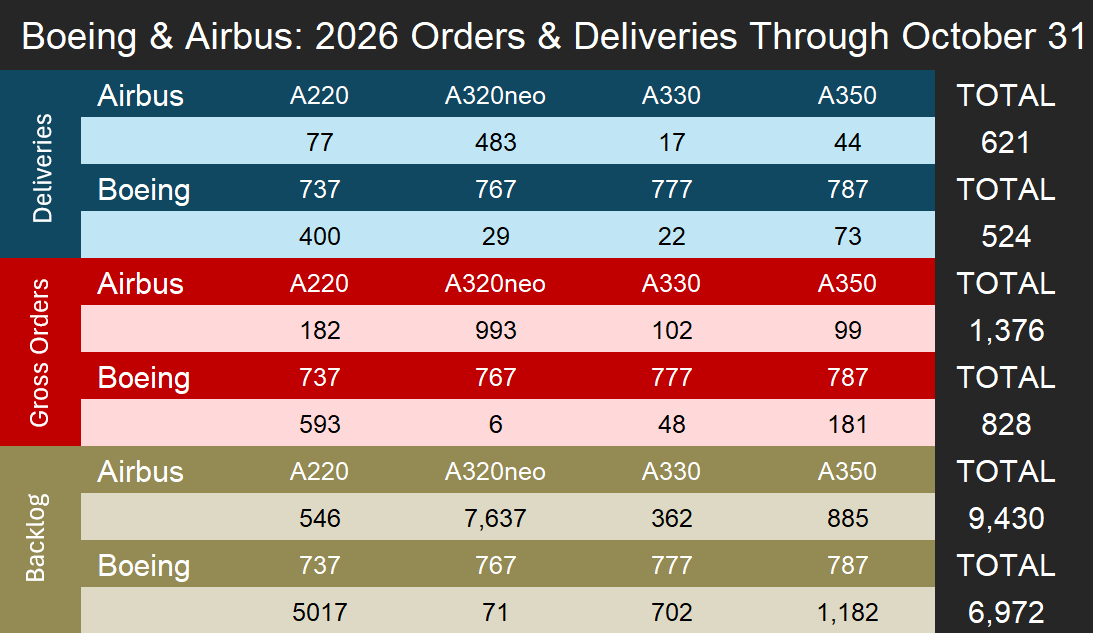
Airbus’s total order backlog expanded to 9,430 aircraft at the end of October, as monthly orders well outpaced deliveries. Single-aisle aircraft dominate the order book, led by 7,637 unfilled orders for the A320neo family and 546 commitments for the A220. Widebody platforms account for 1,247 aircraft, consisting of 885 orders for the A350 and 362 for the A330 family. Based on Airbus’s full-year target of approximately 870 deliveries, its total order backlog provides roughly 10.8 years of forward production coverage. On the Boeing side, the total commercial aircraft backlog rose to 6,972 aircraft at the end of October, as strong order intake has continually exceeded monthly deliveries throughout the year. As expected, narrowbody aircraft represent the majority of Boeing’s remaining commitments, supported by 5,017 orders for the 737 family. The widebody segment comprises 1,955 aircraft, including 1,182 orders for the 787 Dreamliner, 702 for the 777 series, and 71 for the 767 program. Based on Boeing’s delivery trajectory for the year, its order backlog represents approximately 11.1 years of manufacturing output.

With diverse experience in the commercial aviation industry, Grant joins Forecast International as the Lead Analyst for Commercial Aerospace. He began his career at the Boeing Company, where he worked as a geospatial analyst, designing and building aeronautical navigation charts for Department of Defense flight operations.
Grant then joined a boutique global aviation consulting firm that focused on the aviation finance and leasing industry. In this role he conducted valuations and market analysis of commercial aircraft and engines for banks, private equity firms, lessors and airlines for the purposes of trading, collateralizing and securitizing commercial aviation assets.
Grant has a deep passion for the aviation industry and is also a pilot. He holds his Commercial Pilots License and Instrument Rating in addition to being a FAA Certified Flight Instructor.