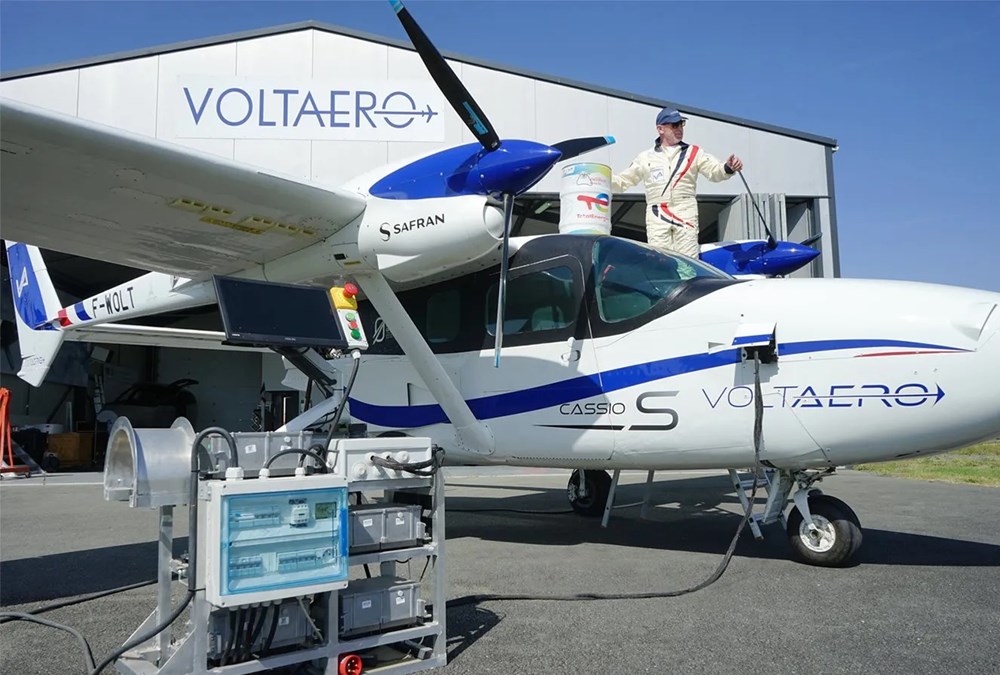
VoltAero recently flew its proprietary electric-hybrid powertrain with 100 percent sustainable aviation fuel. The flight tested both the hybrid powertrain’s electric mode and its internal combustion engine – which was fueled by TotalEnergies’ Excellium Racing 100, a brand of sustainable aviation fuel (SAF) made from bioethanol produced from waste that originates in French vineyards.
The powertrain is mounted on VoltAero’s Cassio S testbed airplane – a tech demonstrator that VoltAero is using to validate its electric-hybrid powertrain and the application of sustainable fuels as it moves toward certification of production models of a planned family of light general aviation aircraft.
The company said the test flight resulted in a CO2 reduction of about 80 percent versus a comparable internal combustion aircraft. It sees its hybrid powertrain approach as a path to reach aviation’s decarbonization goals and replace standard Avgas 100 high-octane fuel in aviation piston engines.
VoltAero’s propulsion system features an electric motor in the aft fuselage-mounted hybrid propulsion unit. The electric motor powers the aircraft during the taxi, takeoff, and landing phases of a flight. It can also power the aircraft for the entire flight on short trips of under 81 nautical miles (150 km). For longer flights, the hybrid system’s internal combustion engine comes into play as a range extender, recharging the aircraft’s batteries while in flight. The internal combustion engine also provides backup power if the electric motor fails.
VoltAero’s first production model is the Cassio 330, a four- to five-seat competitor to the Cirrus SR20/22 family and other light private aircraft. It will be powered by a 330-kW electric-hybrid engine. Other planned models include the six-seat Cassio 480, powered by a 480-kW system, and the 10-12 seat Cassio 600, which will feature a power rating of 600 kW.
Excellium Racing 100 fuel is made from winemaking waste and allows a reduction in CO2 emissions of at least 65 percent over its entire life-cycle when compared with the fossil fuel equivalent, the fuel maker says. It has been used since 2022 in certain automobile races, including the famous 24 Hours of Le Mans endurance race.

Douglas Royce covers the aviation gas turbine and military markets at Forecast International, a market research firm that forecasts annual production across a wide range of aerospace and defense systems.