 Source: Joyce N. Boghosian, White House
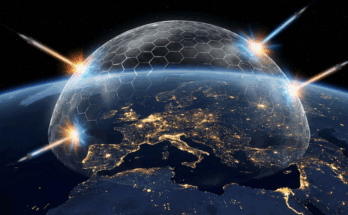
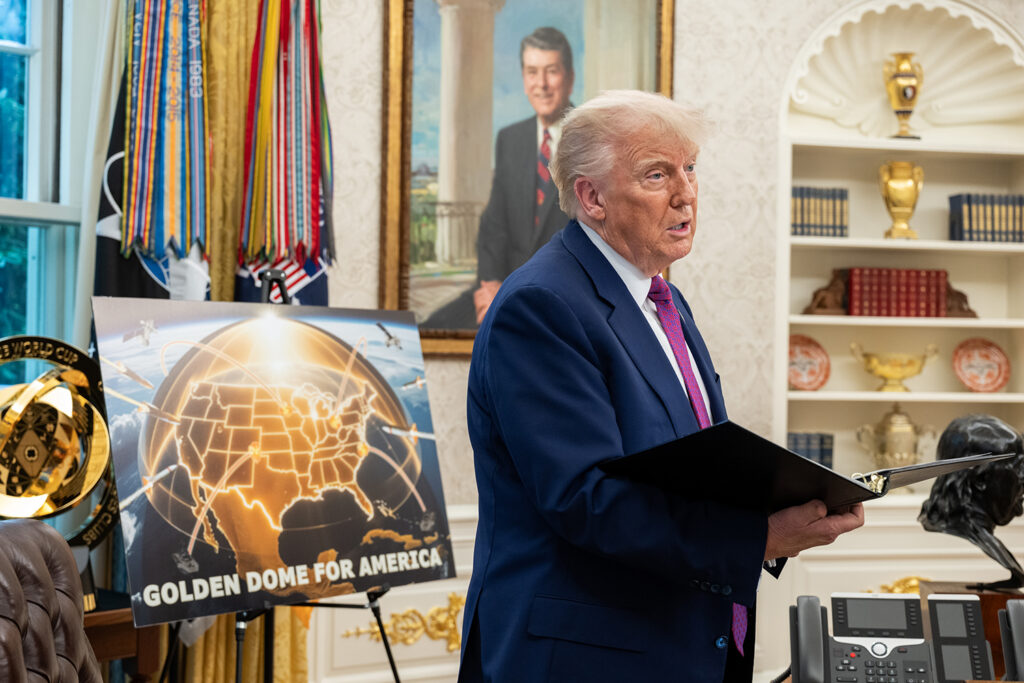
The Congressional Budget Office (CBO) recently released the “Potential Costs of a National Missile Defense System” analysis in relation to the Golden Dome for America initiative. The CBO estimates that the Golden Dome will cost $1.2 trillion to “develop, deploy and operate for 20 years.” The most expensive piece of Golden Dome will be the Space-Based Interceptor system which is designed to engage and defeat targets in the “boost-phase” of flight, during which the rocket is moving its slowest and generally has a linear trajectory.
The Golden Dome initiative is not new. The Strategic Defense Initiative (SDI) was championed by President Ronald Reagan in the 1980s to perform a similar task. The goal of SDI was to create a comprehensive, multi-layered defensive shield to protect the United States from an attack by Soviet nuclear intercontinental ballistic missiles (ICBMs).
The planned system would include lasers, kinetic kill vehicles and ground-based interceptors to intercept ICBMs at various phases of flight. Not unlike the Golden Dome initiative today, this was a massive undertaking and eventually was scaled back after the collapse of the Soviet Union.
Today’s Golden Dome will face similar issues moving forward and space-based assets will take center stage in developing the system. Price is the main concern and within that price is the SBI layer.
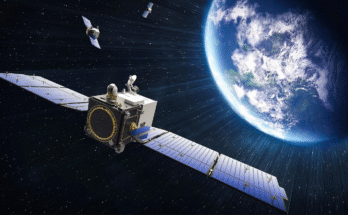
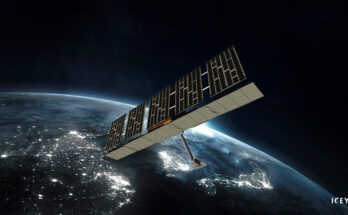
The CBO expects that the SBI layer will account for 70% of acquisition costs and 60% of total costs. The number of interceptor satellites needed was estimated by the CBO at 7,800 spacecraft. The cost for these satellites comes in at $723 billion total for acquisition. The large number needed for this constellation is due to absenteeism, which means that due to the nature of LEO, one satellite cannot be over a specific target for longer than a few minutes. Therefore a large constellation will be needed to maintain constant coverage over potential threats. Life expectancy is another issue as well.
These satellites will operate in Low Earth Orbit (LEO) and therefore have a shorter life expectancy which is roughly five years. LEO satellites, being closer to Earth, experience various difficulties within the orbit such as atmospheric drag, which leads to orbital decay, and a congested environment filled with space debris, ensuring that sustaining this massive defensive shield will be a continuous logistical hurdle.
Satellites will therefore need consistent replacement. There have been major steps forward in “in-orbit refueling” from companies such as Orbit Fab and Astroscale; however, the amount of refueling satellites needed for 7,800 SBIs would be significant and likely necessitate a whole separate constellation just to maintain them. The physics of LEO dictate that replacing a $22 million satellite is likely vastly cheaper than developing a highly agile refueling shuttle.
The CBO states that 1,600 satellites will be needed per year to maintain the constellation beyond the initial 7,800. With CBO’s estimates of $22 million per satellite, the costs would be monumental in comparison to other programs.
Beyond the staggering economic and logistical constraints, another factor is what adversaries are thinking. The CBO has calculated the 7,800 figure as that needed to intercept ten simultaneous threats. If that is the limit, an adversary then would know to launch more than ten missiles to have a hope of success. ASAT weapons could also be used to neutralize a portion of the SBI layer in a conflict. Weapons that could destroy even a portion of the SBI layer would possibly trigger what is known as Kessler Syndrome:
“As the number of artificial satellites in earth orbit increases, the probability of collisions between satellites also increases. Satellite collisions would produce orbiting fragments, each of which would increase the probability of further collisions, leading to the growth of a belt of debris around the earth.” (Donald J. Kessler and Burton G. Cour-Palais; Collision Frequency of Artificial Satellites: The Creation of a Debris Belt)
Although Kessler Syndrome is still debated, if it were to occur it would be catastrophic for future space operations.
These SBI satellites will significantly affect the market in terms of production. To put into perspective, SpaceX has launched its 10,000th Starlink satellite recently and the interceptor layer will have similar deployment numbers depending on the final architecture. The CBO’s estimate of 7,800 satellites might be spot on; however, more than likely the final architecture will have different figures. Either way, the interceptor layer will be a massive undertaking in terms of satellite numbers, launch cadence and replacement factors.
While the Golden Dome initiative presents an ambitious vision for homeland defense, it faces severe near-term hurdles. It is possible to develop, deploy and utilize SBIs; however, the cost, the nature of LEO and potential adversarial reactions might make Golden Dome a bridge too far.

Carter Palmer has long held a keen interest in military matters and aviation. As a FI's space systems analyst he is responsible for updating the reports and analyses within the Space Systems Forecast – Launch Vehicles & Manned Platforms and Space Systems Forecast – Satellites & Spacecraft products.
image sources
- Golden Dome: Joyce N. Boghosian, White House