 Source: Adobe Stock
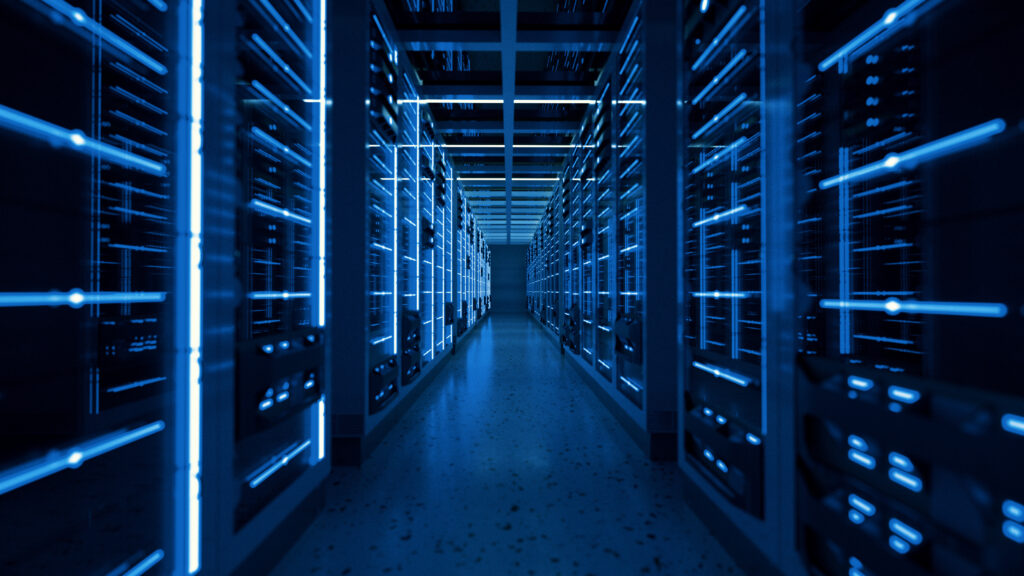
Data centers are currently driving a massive boom in the power generation market, specifically with gas turbines. The need? Large amounts of power are needed to support these centers and speed is necessary to get these installations up and running. Therefore “behind-the-meter” gas turbine installations are being utilized to supply the power for these high-energy installations.
Although the gas turbine market is being affected, Space may become a new frontier for data centers if Elon Musk and others have their say. Power is the main driver for these centers and harnessing solar power in space might be the answer.
There have been growing issues with data centers here on Earth. The problem is that data centers have been reported as noisy, water intensive and polluting entities. Therefore, would it not make sense to do all of this in Space?
Cooling is a major issue for data centers and water has been used for this purpose on Earth. Satellites, however, can use Radiative Cooling and radiate the heat to Space. This would save millions of gallons of water that is currently being used to cool data centers. Solar panels would also have no atmosphere in which to operate, thus making them more efficient.
There are many companies that are investigating the idea of putting data centers in Space. With solar power, there would be an unlimited supply of energy for on-board processors for data center applications. Starcloud launched its first satellite (Starcloud-1) which has an NVIDIA H100 GPU which specifically ran Google DeepMind’s “Gemma” model and Andrej Karpathy’s nanoGPT in space. Further satellites are planned for the constellation, connecting with Starlink. SpaceX has its own ambitions as well.
SpaceX is planning a massive satellite fleet, with numbers up to one million spacecraft. There has been speculation as to whether this will be attainable and the jury is still out. Putting a million, large satellites in orbit will likely create more space junk. Many of the data center satellites would need to be placed in “graveyard orbits” rather than burning up in the atmosphere. Hugh Lewis told PCMag, “Using Earth graveyard orbits would not be a good idea. The derelict ODCs (orbital data centers) would accumulate in graveyard orbits at a rate of about 800,000 satellites every 5 years, or 160,000 every year on average and the collision risks in the graveyard orbits would quickly reach unsustainable levels, with the potential for fragments from any collisions there to reach all important Earth orbits.”
If a million satellites were to be launched it would significantly alter the landscape of Space. Currently, the largest constellation of satellites is Starlink with over 11,000 satellites launched. The space community is assessing the consequences of so many satellites in orbit, with a million satellites whatever issues Starlink has will be dwarfed by these even larger constellations.
SpaceX and Starcloud are not the only companies pursuing space-based computing. Google is actively partnering with satellite operators to test space-based computing hardware via “Project Suncatcher,” and Jeff Bezos’ Blue Origin is developing foundational infrastructure to support its own vision of gigawatt-scale orbital data centers.
With the pushback from many communities against data centers, the facilities are a double-edged sword. The desire is there for the data but how it is being harnessed is a debated issue. Space might be a better option but that too has its drawbacks.
There is also the question of how quickly data center build-outs continue amid a spike in energy prices that affects the ability to bring data centers here on Earth online, and whether this shapes companies’ timelines for orbital data centers. Discussions about space-based data centers have arisen due to an unrelenting need to expand computing capacity supporting an array of digital services, with artificial intelligence (AI) model training and operation responsible for the recent surge in interest. This expansion has already been strained by a shortage of certain components and the costs of bringing new data centers online. Further strain will be added by continued strains on global energy supplies resulting from the closure of the Strait of Hormuz.
If these strains continue, efforts to build prototypes for space-based data centers that rely on unlimited solar power could accelerate, though this is uncertain. Conceivably, it could just as well curb private investors’ and firms’ appetites for data center expansion in the short-term (which is not to say this will remain indefinitely). Much remains to be seen.

Carter Palmer has long held a keen interest in military matters and aviation. As a FI's space systems analyst he is responsible for updating the reports and analyses within the Space Systems Forecast – Launch Vehicles & Manned Platforms and Space Systems Forecast – Satellites & Spacecraft products.

Industry Analyst
Education: MA, Political Science, Villanova University; BA, Political Science & Philosophy, Rosemont College.
Vincent Carchidi has a background in defense and policy analysis, specializing in critical and emerging technologies. He is currently a Defense Industry Analyst with Forecast International.
image sources
- AdobeStock_335703289: Adobe Stock