 Source: ESA
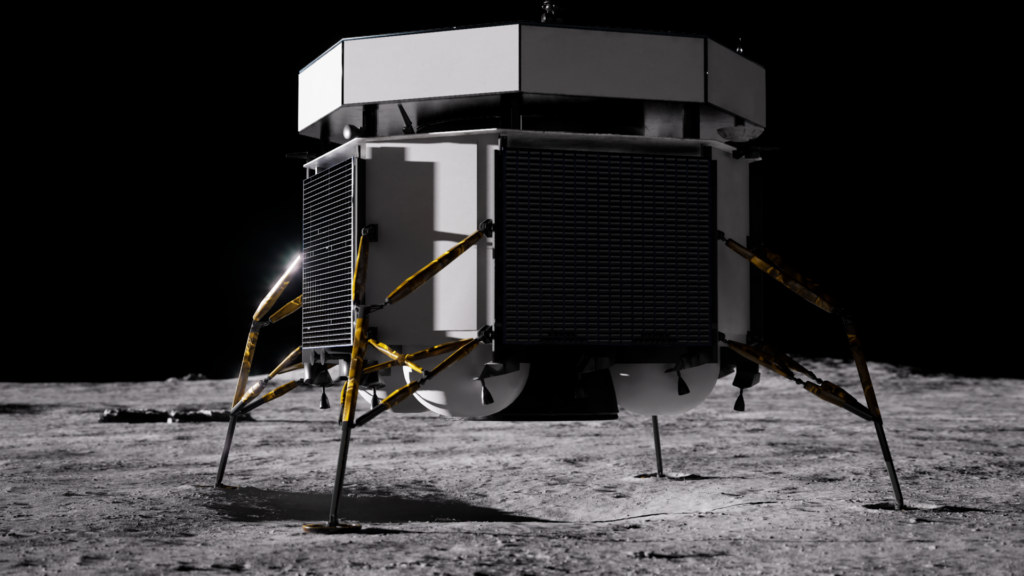
A Pre-Authorization to Proceed (PATP) contract was signed at the Farnborough Air Show between OHB System AG and MDA Space Ltd. for landing sensors for the future Argonaut spacecraft. The sensors, two LEIA Light Detection and Ranging (LiDAR)s, will outfit the first Argonaut mission to the lunar surface. The LEIA (LiDAR for Exploration and Intelligent Autonomous Landing) features a pulsed laser beam to map the surface target.
The spacecraft is part of the European Space Agency’s lunar lander program. The purpose of the craft is to deliver cargo to the Moon’s surface to support NASA’s Artemis program. The first mission is slated for 2030.
Thales Alenia Space will build the Lunar Descent Element (LDE), which will land the “Passenger”, a cargo platform. The Argonaut will launch on an Ariane 64.
The ESA Argonaut lander solves a fundamental operational requirement for the Artemis program: transitioning lunar exploration from short visits to a sustained human presence. Capable of landing 1.5 tonnes of cargo with high precision, Argonaut provides the routine, heavy-payload resupply needed to maintain surface infrastructure and life support. In doing so, it elevates Europe from a secondary mission contributor to a primary logistics manager, granting the continent strategic leverage, guaranteed astronaut opportunities, and a vital role in the future lunar economy.

Carter Palmer has long held a keen interest in military matters and aviation. As a FI's space systems analyst he is responsible for updating the reports and analyses within the Space Systems Forecast – Launch Vehicles & Manned Platforms and Space Systems Forecast – Satellites & Spacecraft products.
image sources
- Argonaut_pillars: ESA