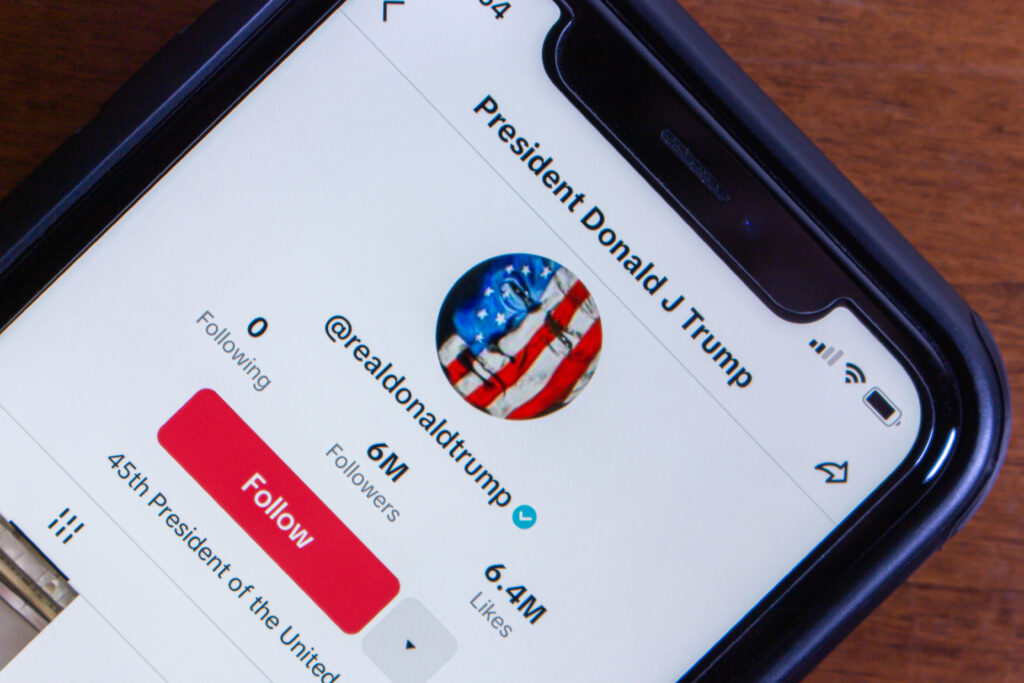
On Thursday, President Donald Trump stated on his social media site, Truth Social, that he was “hereby decertifying” the Bombardier Global Express and “all Aircraft made in Canada,” citing a dispute over Gulfstream’s access to the Canadian market. He coupled the statement with a threat to impose a 50% tariff if the issue was not “immediately corrected.”
Whether a president can unilaterally decertify an aircraft outside the FAA’s established processes is, at best, unclear. What is clear is that the market reacted immediately. Bombardier’s share price moved, and industry participants were briefly forced to consider a scenario that would have been unthinkable under normal regulatory practice. Certification, typically a technical and legal process, was suddenly being framed as a negotiating tool in a trade war.
For market analysts, this adds a new dimension to forecasting production in aerospace and defense. Forecasting is built around variables that change slowly: order backlogs, government contracts, customer demand, fleet replacement cycles, production capacity. None of those analytical frameworks work when policy declarations are issued by a president on social media without process, warning, or institutional backing. The “Trump factor” is not a risk or demand factor analysts have dealt with in the past, even during his first term in office. This time really is different.
There is a widening gap between what Trump says publicly and what is ultimately executed by the government. He announces a maximalist threat on his social media account, usually without consulting with manufacturers beforehand. Agencies remain silent. Legal experts point out the obstacles. Eventually, the issue is walked back by his aides or quietly dropped as his attention moves elsewhere. Over time, the industry has learned to discount these episodes, assuming that those directives which clearly conflict with U.S. law or international norms are unlikely to materialize.
That assumption, however, is not without risk. The administration’s earlier use of steel and aluminum tariffs showed that rhetoric can, under the right conditions, become policy. The difficulty is knowing when to take a threat seriously and when to treat it as noise. That uncertainty forces analysts to stray from economics into something closer to behavioral psychology: we have to consider not just what makes sense in economic or military terms, but what might trigger a disproportionate or ill-considered reaction from the White House.
Until recently, aviation had largely avoided this kind of direct exposure to the whims of the president. Trade disputes tended to run through established channels, and certification remained insulated from broader political bargaining. This episode feels different. By explicitly linking airworthiness to market access, it challenges a foundational assumption of how the industry is regulated. Even if nothing comes of it, the possibility alone is enough to make companies hesitate, hedge, and delay decisions.
Political risk has always existed, but now unpredictability and behavioral psychology have emerged as factors that must be considered in forecasting aerospace programs. Until a clearer boundary between social media declarations and formal government policies returns, the industry should expect more episodes like this.

Douglas Royce covers the aviation gas turbine and military markets at Forecast International, a market research firm that forecasts annual production across a wide range of aerospace and defense systems.