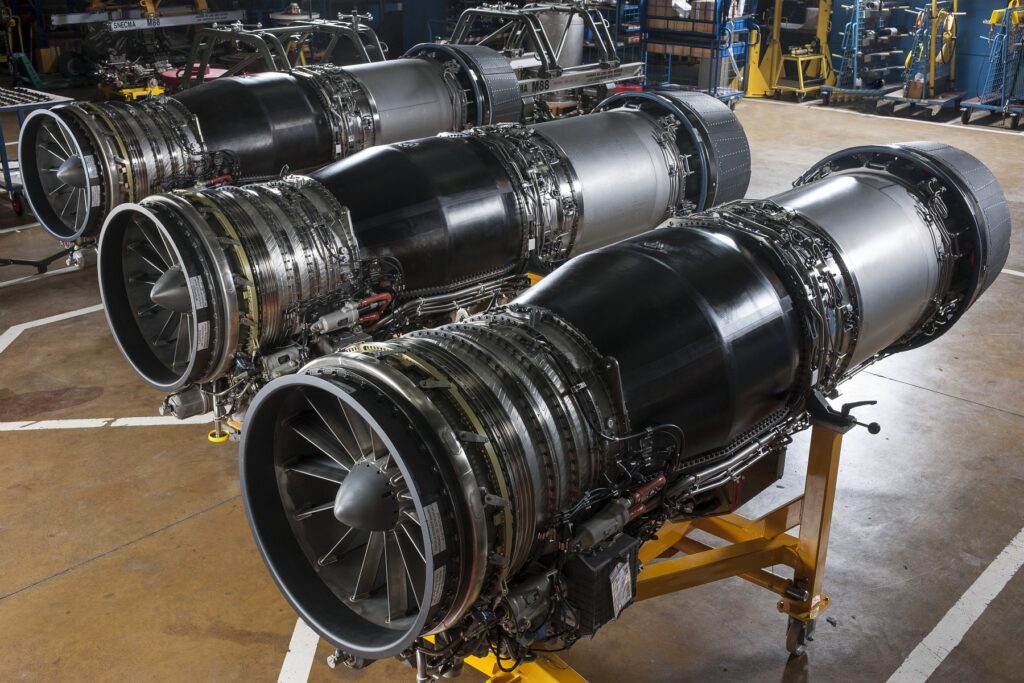
Safran Aircraft Engines has unveiled a €70 million ($76 million) expansion plan for its Le Creusot facility. While the project entails a physical expansion of both footprint and workforce, the new investment also represents a critical pivot toward building redundancy into Safran’s supply chain.
The expansion, scheduled to be fully operational by 2029, will transform the Le Creusot site from a specialized civil aviation hub into a dual-use facility. By integrating production lines for the military M88 engine alongside existing commercial lines, Safran is effectively insulating its most critical programs from the single-source vulnerabilities that have rattled the global aerospace industry in the post-pandemic era.
The Scope of the Expansion
Currently, the Le Creusot facility serves as a dedicated node for the machining of low-pressure turbine disks for CFM International’s LEAP and CFM56 engines. Demand for the CFM56 is limited, but demand for the LEAP family—the engines powering the Airbus A320neo and Boeing 737 MAX narrowbodies—has skyrocketed. Safran, a 50/50 partner with GE Aerospace in the CFM joint venture, needs to increase production to enable aggressive ramp-ups of narrowbody airliners at both aircraft manufacturers.
The newly announced project will add 96,875 square feet (9,000 sq m) to the site, bringing the total industrial floorspace to 279,861 square feet (26,000 sq m) by the end of the decade.
However, the capital injection is not merely for floor space; it is also a workforce and technology investment. Safran plans to increase the site’s headcount from 200 to 300 employees by 2032. The facility is being tooled to handle complex rotating parts for two additional engine classes: the GE90, which powers legacy Boeing 777 models, and, crucially, the M88 turbofan, which powers the Dassault Rafale.
Machining operations for these new lines are set to commence within the existing facility as early as 2026, transitioning to the newly expanded area upon its completion.
The M88 Ramp-Up
Currently, the complex rotating parts for the M88 are produced primarily at Safran’s Évry-Corbeil facility. By establishing Le Creusot as a second source, Safran is increasing the resilience of its supply chain.
This move comes at a pivotal moment for the Dassault Rafale program. Following a period of sluggish sales in the 2010s, the Rafale has seen a surge in export success, securing major orders from nations including Croatia, Greece, Indonesia, the UAE, and Egypt, alongside sustained orders from the French military. This commercial success has created a distinct industrial challenge: a steep production ramp-up requirement. Dassault Aviation and its partners, including Safran, are under pressure to accelerate delivery rates to meet these contractual obligations.
Creating a second production line at Le Creusot achieves two strategic goals. First, it provides the raw capacity needed to meet the increased delivery cadence of the Rafale, ensuring that engine production does not become the bottleneck for airframe delivery.
Second, it eliminates a single point of failure. In an era of geopolitical instability and supply chain fragility, having a single site responsible for the critical components of a frontline fighter jet is a strategic liability. This expansion reinforces what Safran terms “industrial and technological sovereignty”—a clear nod to the French government’s mandate to maintain an autonomous and resilient defense industrial base.
The introduction of GE90 parts production at Le Creusot also signals confidence in the widebody market’s recovery. As long-haul traffic grows, demand for spares and new units for the Boeing 777 fleet remains a lucrative revenue stream that Safran is positioning itself to capture more aggressively.
Conclusion: A Dual-Use Future
For Safran, this expansion is both a defensive and offensive maneuver. Defensively, it protects the LEAP and M88 programs from supply shocks. Offensively, it positions the company to capture the upside of the Rafale’s export boom and the post-pandemic resurgence of civil travel.

Douglas Royce covers the aviation gas turbine and military markets at Forecast International, a market research firm that forecasts annual production across a wide range of aerospace and defense systems.