Rolls-Royce reported a strong 2025, posting underlying operating profit of £3.5 billion (about $4.4 billion) on revenue of £20.1 billion ($25.3 billion) – up sharply from £2.5 billion in profit the year before. Free cash flow hit £3.3 billion ($4.2 billion), and the company ended the year with net cash of £1.9 billion ($2.4 billion), compared with just £475 million at the close of 2024. For 2026, Rolls-Royce is guiding for operating profit of £4.0 billion to £4.2 billion ($5.0 billion to $5.3 billion).
Civil aerospace was the standout performer, with an operating margin of 20.5%, up from 16.6% in 2024. The gains came from stronger engine servicing revenue, better contract terms, and increased spare engine sales, with large engine flying hours growing 8% year over year. The company expanded maintenance, repair and overhaul capacity as well, expanding operations at its facilities in Derby, Dahlewitz, Germany, and Singapore during 2025. A new joint venture with Air China in Beijing, which opened in December, is expected to handle up to 250 engine overhauls per year by the mid-2030s.
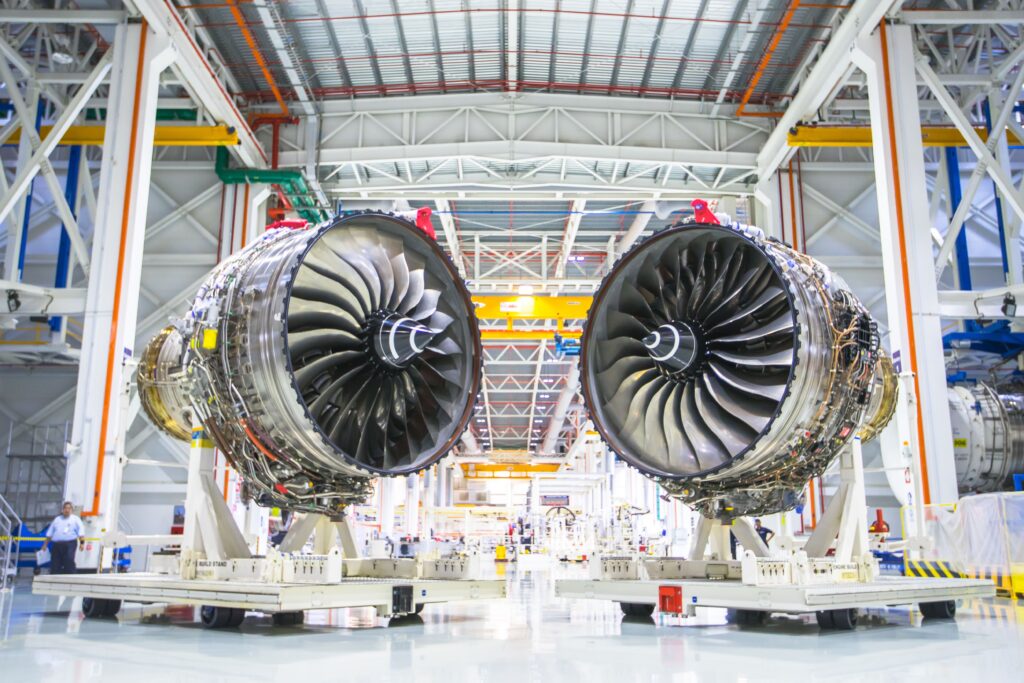
Much of the civil aerospace story centered on improvements to the Trent engine family. Rolls-Royce said its program to extend how long Trent engines can operate between required maintenance visits is now more than halfway to its goal of doubling engine durability across the in-production fleet by the end of 2027. The Trent XWB-84, which powers the Airbus A350-900, received a life extension program that the company said will be completed in 2026, along with the introduction of a new variant – the Trent XWB-84EP – that improves fuel efficiency by over 1% and extends time on wing for new engines. The Trent 1000, used on the Boeing 787, received a certified high-pressure turbine blade improvement in June, with a second-phase blade upgrade for the Trent 1000 XE and Trent 7000 certified in December and slated to be fitted to new and in-service engines starting in 2026. Work on the Trent XWB-97, which powers the A350-1000, is also on track, with durability upgrades expected to be complete by the end of 2027.
The defense division posted a 14.4% operating margin, roughly flat with 14.2% the year before, with growth in transport and combat aircraft engine programs. The company secured more than £1.5 billion ($1.9 billion) in aftermarket contracts with the U.K. Ministry of Defence and U.S. Department of Defense covering EJ200 and AE 2100 engines. Testing of two additional engine programs – the AE 1107 for the Army’s future long-range assault aircraft and the F130 for the B-52 bomber – is progressing on schedule. Separately, a deal signed by Turkey and the U.K. to export 20 Eurofighter Typhoon jets, with an option for more, will include Rolls-Royce EJ200 engines.
The company’s broader cost-cutting effort has now delivered £0.6 billion ($756 million) in savings since 2022, exceeding its £0.5 billion target, alongside £1.2 billion ($1.5 billion) in third-party procurement savings that also beat the original goal. Rolls-Royce said it is continuing to expand shared service operations in India and Poland and rolling out zero-based budgeting across the group. Its ratio of total underlying cash costs to gross margin improved to 0.36 from 0.47 in 2024 – a metric the company uses to track cost discipline. Looking further out, the company set a 2028 target of £4.9 billion to £5.2 billion ($6.2 billion to $6.6 billion) in operating profit at an 18% to 20% margin.

Douglas Royce covers the aviation gas turbine and military markets at Forecast International, a market research firm that forecasts annual production across a wide range of aerospace and defense systems.