Safran released its results for 2025 on February 13. The primary drivers of growth during the year were the civil aftermarket, increased LEAP production volume, and original equipment deliveries in the defense sector.
Full-year 2025 revenue totaled €31.3 billion, a 14.7 percent increase over 2024. Recurring operating income reached €5.2 billion, representing 16.6 percent of sales, a 150 basis point expansion. Free cash flow generation was strong at €3.9 billion, driven by advance payments and despite substantial investments in production capacity. The group has issued 2026 guidance projecting revenue growth in the low-to-mid teens and recurring operating income between €6.1 billion and €6.2 billion. Management also raised its 2028 financial ambitions, targeting recurring operating income of €7.0 to €7.5 billion.
The Propulsion division posted revenue growth of 17.6 percent, with aftermarket activity outperforming initial expectations. Civil engine spare parts revenue increased by 17.6 percent in dollar terms, supported by high utilization of the mature CFM56 fleet and an increase in shop visits. Service revenue for civil engines grew by 30 percent, driven by the expansion of rate-per-flight-hour contracts for the LEAP engine. High-thrust engine programs also contributed to the growth as widebody aircraft traffic exceeded pre-Covid levels.
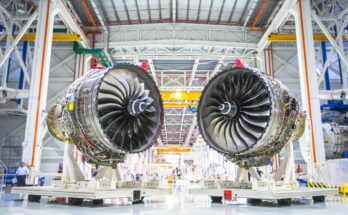
LEAP engine deliveries reached a record 1,802 units in 2025, a 28 percent increase from the 1,407 units delivered in 2024. Deliveries accelerated in the fourth quarter, reaching 562 units, up 49 percent year-over-year. The manufacturer cited improvements in the supply chain as a key factor in this industrial performance. However, supply chain production capabilities remain a “watch item” for the group as it plans for a further delivery increase of approximately 15 percent in 2026.
Military propulsion revenue saw a slight increase, supported by services and a favorable original equipment customer mix. Production of the M88 engine for the Rafale fighter is ramping up in line with plans to fulfill a strong export backlog. Helicopter engine revenue also grew, primarily due to services and higher turbine deliveries, while missile propulsion revenue increased on ramping deliveries. The division is targeting an operating margin of 22 to 24 percent annually starting in 2025.