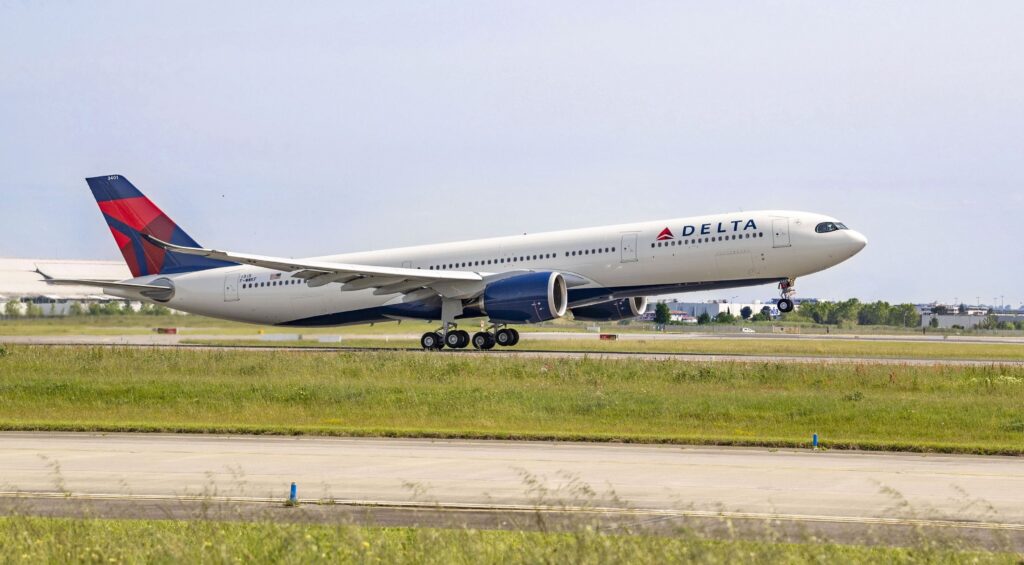
Rolls-Royce has strengthened its foothold in the North American widebody market with a significant new order from Delta Air Lines, announced on January 28, 2026. The deal encompasses 62 engines in total: 30 Trent XWB-84 EP engines to power 15 Airbus A350-900s, and 32 Trent 7000 engines for 16 Airbus A330-900neo aircraft. This agreement not only underscores Delta’s confidence in the British manufacturer’s technology but also secures a long-term revenue stream through the accompanying TotalCare® service agreement, which guarantees maintenance support and predictable costs for the airline’s growing widebody fleet.
For the Trent program, the A330neo portion of the order is particularly valuable due to the platform’s unique market position. While many widebody aircraft programs have historically offered airlines a choice of engine manufacturers, the A330neo is exclusively powered by the Rolls-Royce Trent 7000. This exclusivity means that every A330neo sold by Airbus automatically translates into a confirmed order for Rolls-Royce, eliminating the need to compete for engine selection on a tail-by-tail basis. As the sole option for this aircraft family, the Trent 7000 program enjoys a guaranteed 100% market capture rate on the airframe, making the A330neo a critical pillar of stability in Rolls-Royce’s civil aerospace portfolio.
The order also provides a crucial boost for the Trent XWB program on the Airbus A350. While the widebody engine market is fiercely contested—dominated by the rivalry between Rolls-Royce and General Electric—the A350 remains a fortress for Rolls-Royce. Although GE’s GEnx engine has seen prolific sales success on competing airframes like the Boeing 787, the Trent XWB is the exclusive powerplant for the A350 family. This order from Delta, one of the “Big Three” U.S. carriers, ensures that Rolls-Royce maintains its competitiveness in this segment despite the GEnx’s strong market share on the 787 family.
Beyond the immediate boost to the order book, the selection of the “EP” (Enhanced Performance) variant of the Trent XWB-84 highlights the engine industry’s shift toward making incremental efficiency gains. The EP variant offers a 1% fuel burn improvement over the original generation, a metric that translates to substantial fuel savings and reduced CO2 emissions over the lifespan of the fleet. By locking in these orders now, Rolls-Royce not only solidifies its market standing but also deepens its integration with Delta, ensuring that its technology remains the backbone of the airline’s long-haul operations for decades to come.

A lifelong aviation enthusiast, Douglas Royce is currently co-editor of four of Forecast International's Market Intelligence Services: Civil Aircraft Forecast, Military Aircraft Forecast, Rotorcraft Forecast, and Aviation Gas Turbine Forecast. As such, he plays a key role in many important projects that involve market sizing and forecasting for various segments of the world aerospace industry, as well as demand for related systems.